
How to Redesign a Dark Home to Maximise Natural Light (Without Extensions)
Light is more than a design choice — it’s the heartbeat of a home. A dark, cramped, or poorly oriented house can feel heavy and uninspiring, even if it looks “nice” on paper. For homeowners in Melbourne, harnessing natural light is the key to creating a space that’s energising, functional, and deeply welcoming.
In this guide, I share my process for transforming dark homes, from assessing natural light to floorplan redesign, materials, and finishes that make a space feel alive — all without necessarily adding extensions.
Note: Some floorplan studies explored a small extension as a design option, but the focus here is on maximising natural light through thoughtful layout, orientation, and openings — many of which can be achieved without adding to the home.
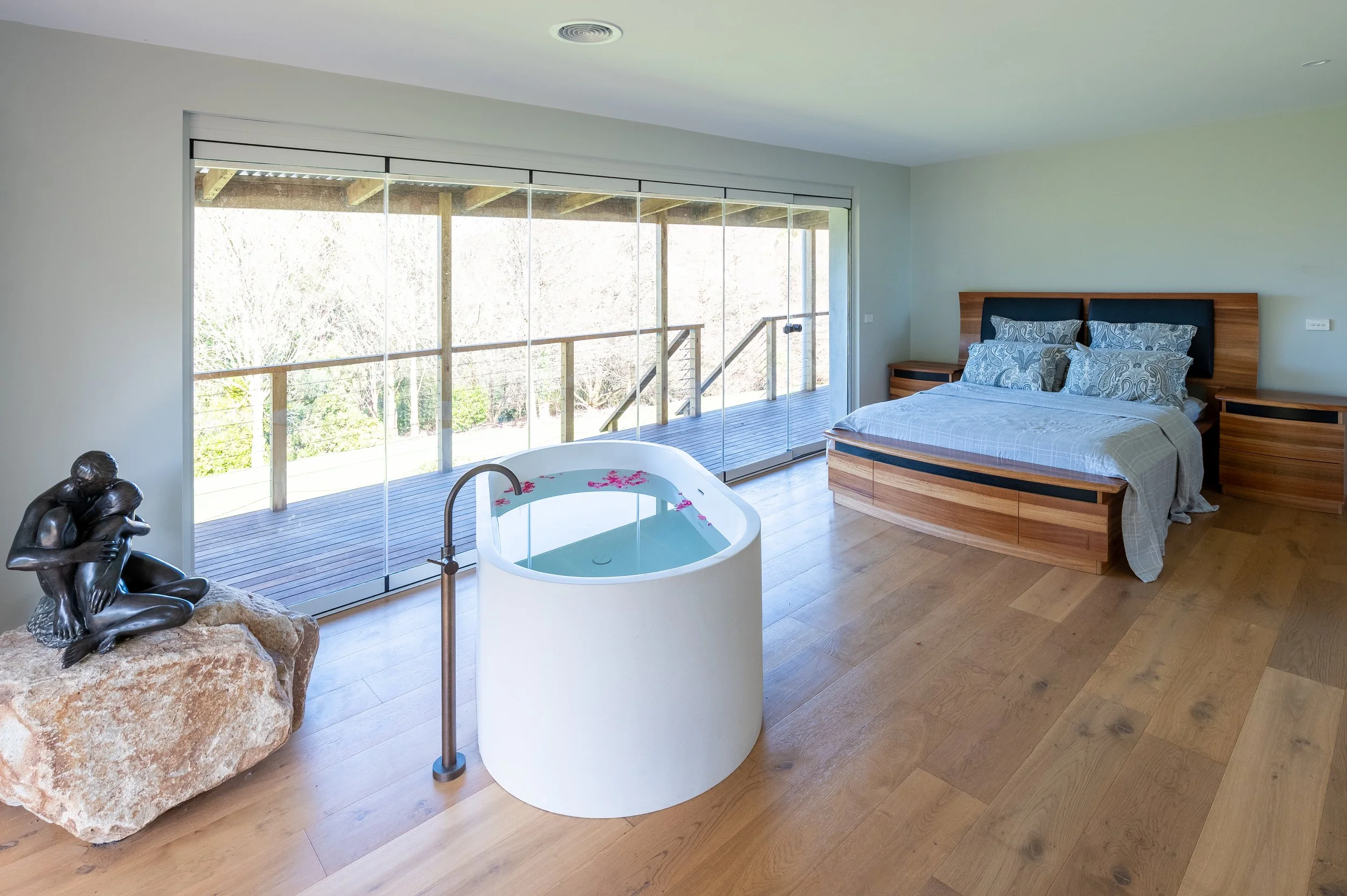
Redesigned country home in Victoria, now filled with natural light and connected to the surrounding landscape.
Why Light Should Be Considered First in Any Renovation
Light affects how we occupy and feel in a space — it’s crucial to liveability. Addressing it early in a renovation ensures the home works with its environment rather than forcing you to adapt.
I’ve seen homes with “kickass designer looks” fail when positioned to catch the hottest western sun — leaving owners constantly running air conditioning to feel comfortable. Light-first thinking avoids that mistake.
Key insight: Early consideration of natural light guides every decision — from floorplan and materials to furniture placement — creating spaces that feel like they were always meant to be.
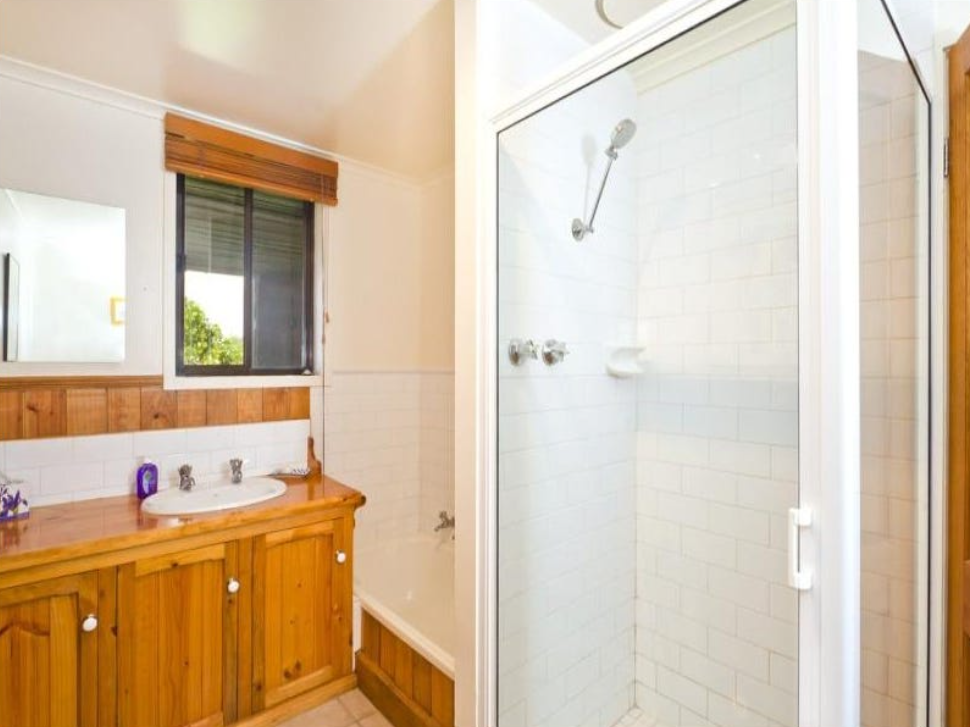
Before: dark and cramped room
Dark bathroom in Melbourne home before redesign, low natural light and cramped layout
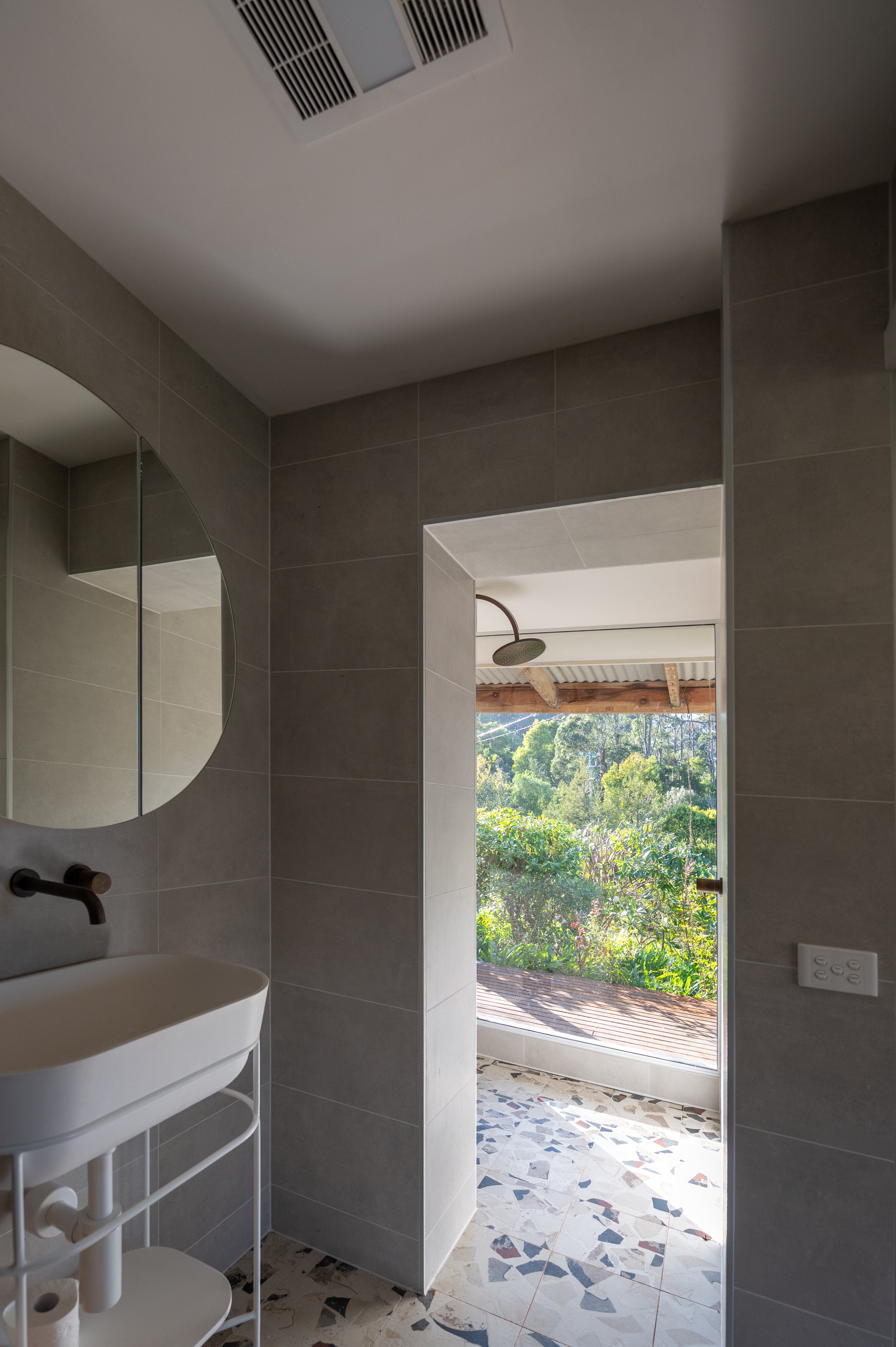
After: space transformed with natural light and warmth
Redesigned Melbourne bathroom filled with natural light, warm materials, and a functional layout
Common Mistakes Homeowners Make When Adding Light
Many people try to “fix” darkness superficially:
Painting everything white without addressing layout
Removing walls blindly without considering sun orientation
Installing skylights without thinking about glare, heat, or seasonal sun paths
Treating rooms individually instead of considering the home as a whole
The biggest limitation? Cost-first thinking. Focusing solely on the cheapest solution often misses opportunities for long-term improvements that transform how a home feels.
Step-by-Step Process for Redesigning a Dark Home

Floorplan Rethinking
Reassigning spaces based on light and function ensures every room feels bright and alive
Here’s how I approach dark Melbourne homes, step by step:
1. Site Visit & Observation
I spend time in the home, observing how light moves throughout the day and across seasons. Which rooms feel heavy or disconnected? Which feel light and alive?
2. Orientation & Environmental Analysis
I study north, east, west, and south exposure, neighbouring buildings, trees, and seasonal shifts in sunlight.
3. Floorplan Rethinking
Living zones are placed where daylight lasts longest or where views demand attention. Service areas move to darker parts of the home or where west sun is strongest.
4. Openings & Connections
Windows, doors, and punctures are placed intentionally to draw light deep into the home while connecting indoor and outdoor spaces seamlessly.
5. Layered Lighting Design
Artificial lighting supports natural light rather than replacing it, creating rhythm and ambience.
6. Materials & Finishes
Reflective surfaces, textures, and finishes hold light and create warmth. By the time we reach furniture and decoration, the home already breathes naturally.
How I Assess Natural Light
Before any design decisions, I consider:
Orientation and sun path
How each space will be used by the occupants
Neighbouring buildings or walls that block light or compromise privacy
Door and window placement
Then, I go a step further — I assess how the space feels. Some rooms technically have light but feel dead; others may have less light but feel alive and calm.
Why Floorplan Redesign Matters More Than Cosmetic Changes
Paint, furniture, and finishes can enhance light, but if the layout is wrong, they’re working uphill.
For example, in a 1960s country home I redesigned, prime light-facing areas were wasted on a laundry, bathroom, and small dining room with heavy curtains. By repositioning living zones and installing ceiling-height stacker doors facing the valley and ocean views, we brought natural light into the home’s heart.
Lesson: Correct floorplan = natural distribution of light. Cosmetic updates = supporting actors, not saviours.

Openings & Connections
Floor-to-ceiling stacker doors open living areas to the outdoors and capture maximum light.
Bringing Light In Without Major Extensions

Diffused Light
Soft, diffused natural light brings warmth and calm to this kitchen without major structural changes
Even without structural changes, you can maximise light:
Colour, sheen, and reflective surfaces
Opening up doorways or windows
Removing non-structural walls to combine small spaces
Improving sightlines so light travels further
Often, it’s not about more windows — it’s about better placement and fewer obstructions.
Balancing Light With Warmth
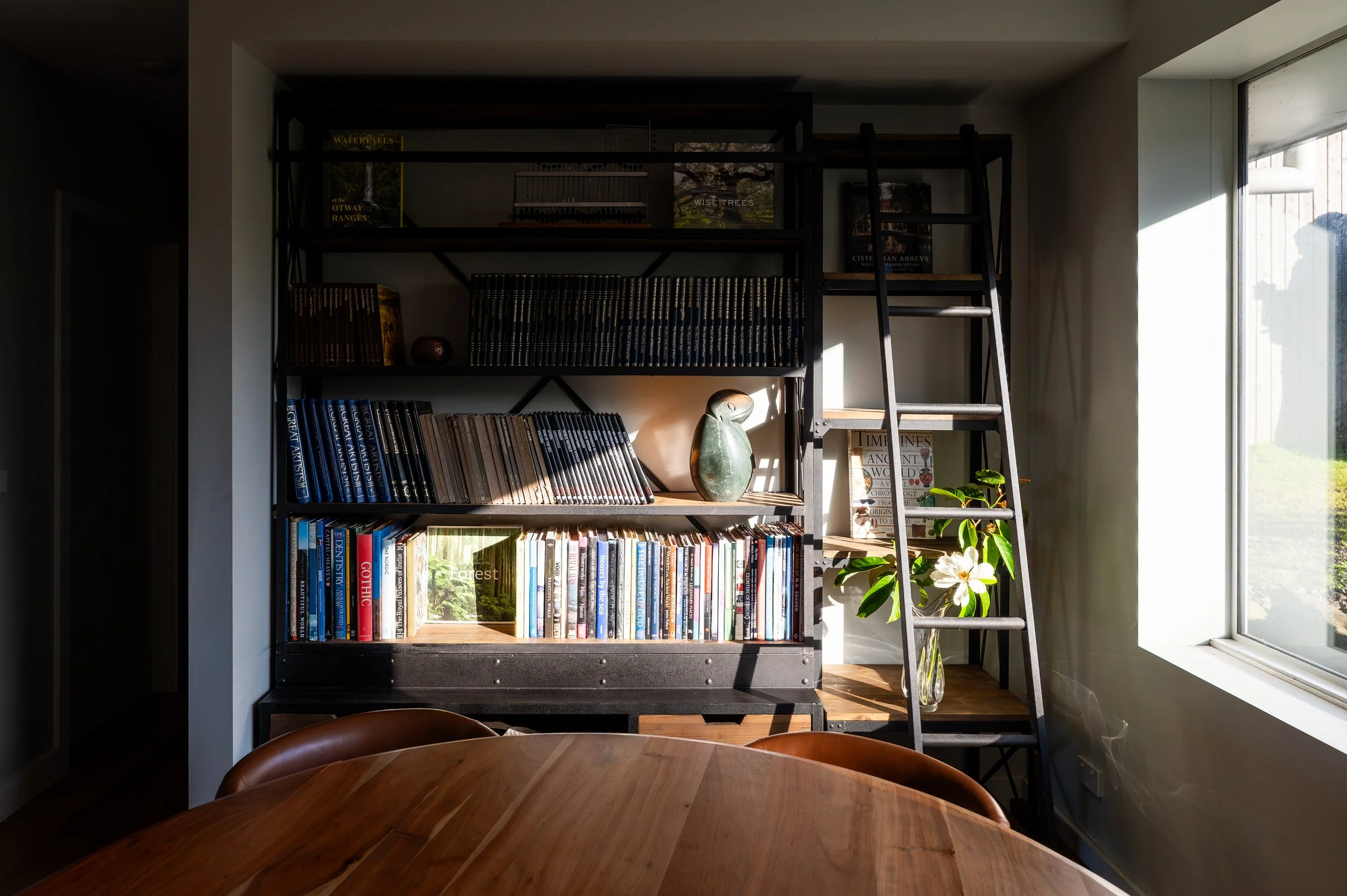
Warmth Meets Light
Balanced lighting with warm materials makes spaces feel inviting, not clinical.
A bright home shouldn’t feel cold or clinical. I balance light through:
Textured materials (wood, stone, fabrics)
Layered lighting instead of flat overhead brightness
Thoughtful colour palettes tailored to orientation
Furniture, décor, and soft furnishings that create intimacy
A well-lit home feels calm, grounded, and human — never like a showroom.
What Makes My Approach Unique
I design for how light makes people feel, not just how it performs. Light influences mood, energy, and connection. My work combines:
Spatial intuition
Energy and flow
Lived experience and emotional response
Respect for the environment
When a home feels like it was always meant to be, I know the light is right.
Client Story: A Country Home Transformation

Before
Before: bedroom with limited access to valley and water views, feeling cramped and stuffy

after
After: bedroom redesigned to capture valley and water views, filled with natural light and a sense of space
Scott, a client, shared his experience:
"Wow! Virginia has somehow managed to turn a stuffy and run down box into a series of spaces that still give me visual and emotional joy every time I enter them. How she was able to envisage this is really quite beyond me, but the outcome is exactly what I wanted and much more than I could have hoped for."
Through floorplan redesign, careful placement of openings, and material selection, this once-dark home now feels alive, Zen-like, and connected to nature — a place everyone wants to gather.
Conclusion
Redesigning a dark home isn’t just aesthetic — it’s about how people live, move, and feel. By considering light first, rethinking the floorplan, and choosing materials with intention, a home becomes beautiful, functional, and deeply soulful.
If you’re ready to explore how your Melbourne home could embrace its natural light potential, I can help you see the bigger picture.